We grew up on images of the perfect home, with sunlit gardens, safe cul-de-sacs, and kitchens big enough for life’s laughter to echo. Today, beloved shows like Bluey, Peppa Pig, and Simon still sell us that dream, wrapping it in warmth and pastel skies. But what happens when our reality looks nothing like the picture? What about the millions of us raising children in city apartments, juggling noise and neighbors instead of lawns and lemon trees?
This is about the quiet power of those images and the hidden ache they can leave behind.
The Blueprint of Happiness
I’m in love with Bluey’s house. It’s a beautiful Queenslander on a hill, nestled at the end of a quiet street where a roundabout slows the rare car. The backyard is lush and generous. An old tree throws shade over the Australian summer heat, and around its wide trunk, some caring carpenter has built a picture-perfect bench—just right for resting and watching. Childhood flourishes here, effortlessly.
This idyllic template repeats across the landscape of children’s television. We see it in Simon the rabbit’s impossibly perfect three-story house and in Peppa Pig’s little garden, where they grow vegetables and jump in muddy puddles with chaotic, healing joy.
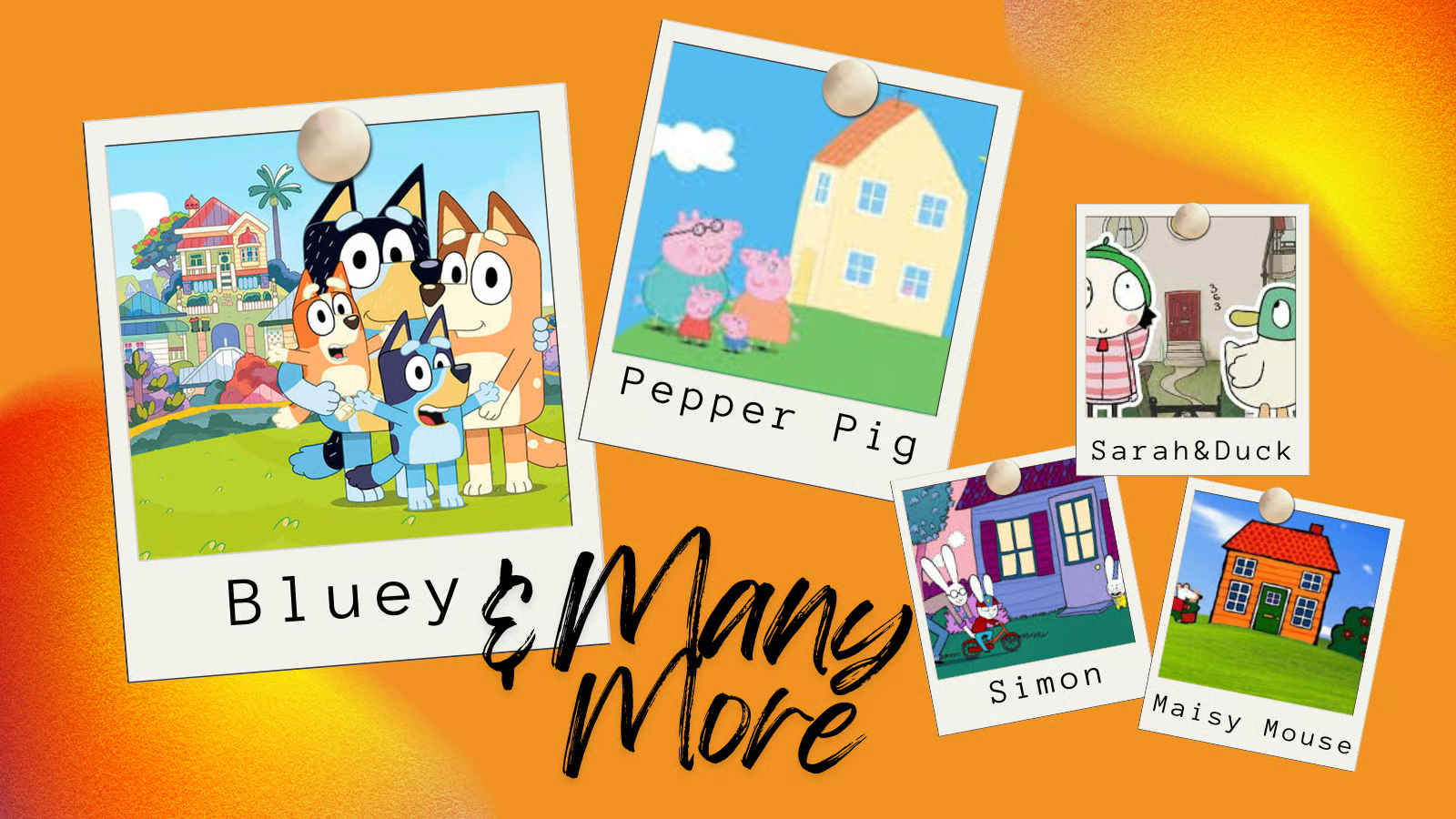
These shows are more than entertainment; they are emotional blueprints. They offer what feels like a hug disguised as a plot, a dream of being held, protected, and seen. But behind the charm lies a pattern: the nuclear, middle-class, suburban family. Two kids, a stable home, and a garden. It’s presented as the default setting for a happy childhood.
The Floorplan vs. The Facts
But is this dream, the one silently sold as the gold standard, achievable for most?
Not in 2025. The image of the single-family home with a yard is a cultural artifact, largely inherited from a post-war suburban boom that is increasingly disconnected from our modern reality. Today, over half the world’s population lives in urban centers, a number projected by the UN to climb to 68% by 2050. Stagnant wages and soaring property prices have pushed the dream of a house with a garden far out of reach for millions.
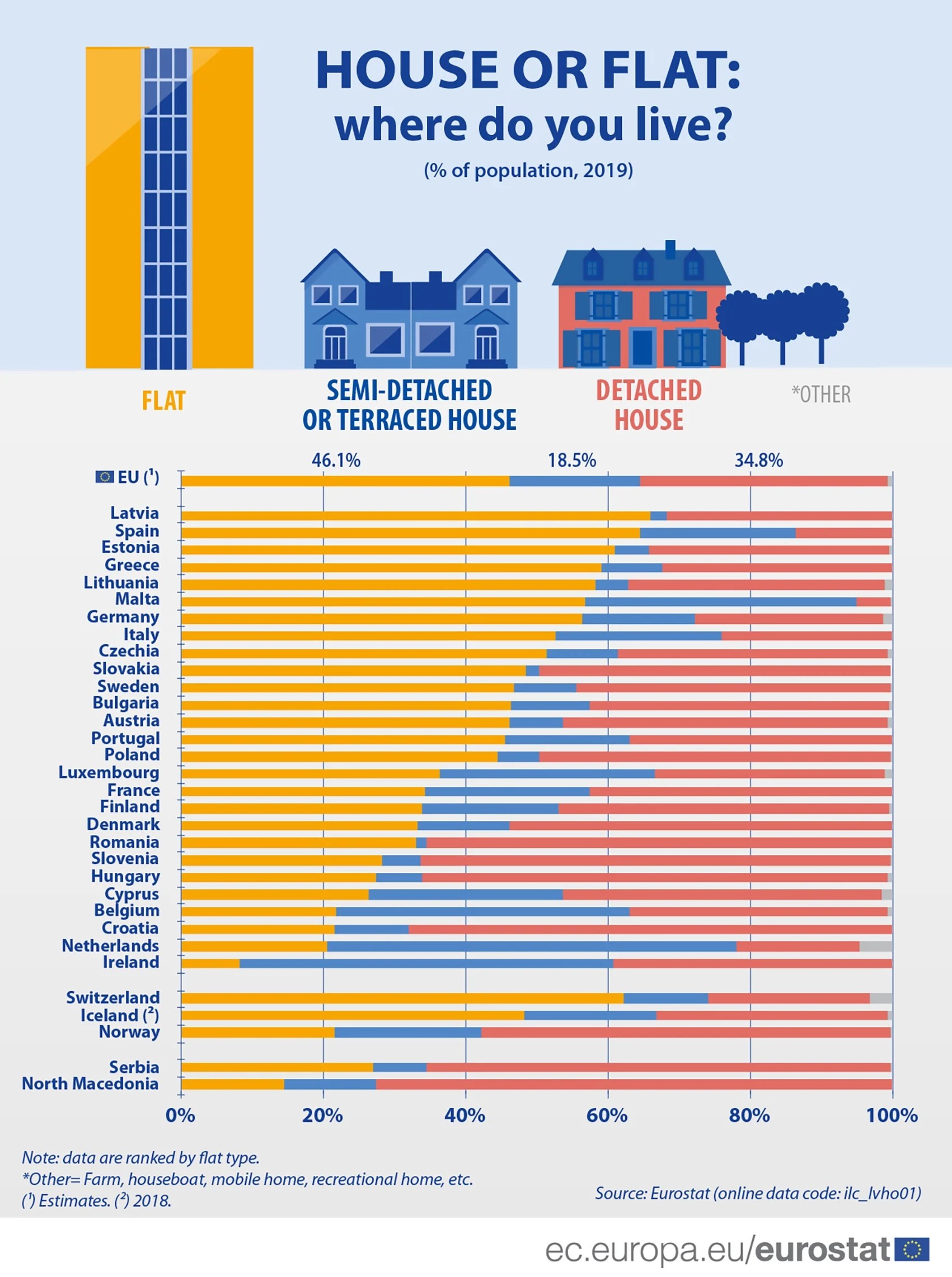
We are raising our children in a different world, one of high-rises, shared community spaces, and diverse family structures that defy the 90s sitcom script. Yet, the old ideal persists on our screens, a silent measuring stick wrapped in soft soundtracks, whispering that a “proper” childhood requires a lawn.
The Hidden Curriculum
This matters because we learn from what we see. As humans, we internalize the images that trigger our emotions. The brain doesn’t differentiate much between a lived experience and a powerfully drawn one; if it feels good, it becomes part of our inner compass. Children’s shows aren’t just telling stories; they are imprinting ideals about what love, safety, family, and home are supposed to look like.
This is where the tension begins. For parents, watching Bluey and Bingo play a wholesome game of parkour in their sprawling garden can trigger a quiet pang of inadequacy. It’s the feeling that whispers, “You’re not there yet.” We project our own longing for peace and security onto a floorplan, believing that if we could just get that house, the chaos would calm, and childhood, whether ours or our children’s, would finally feel whole.
Redrawing the Dream
So, should we ban Bluey and scrap every cartoon that features a dreamy garden? Of course not. These shows offer genuine warmth, imagination, and comfort. The problem isn’t the garden; it’s the unquestioned ideal it represents.
The solution is not to reject the dream, but to expand it. We can start by acknowledging the unique advantages of the lives we actually lead. An urban childhood isn’t a lesser version of a suburban one; it’s a different adventure entirely, rich with museums, libraries, cultural diversity, and public parks that serve as vast, communal backyards.
Our children are not born measuring square meters or craving garden swings. That comparison game comes later. Right now, they are watching us. They are learning what home feels like by living it with us—in small spaces, in bustling cities, in the middle of everything. Our presence, our laughter, our apologies, and our joy are the materials they use to build their sense of security.
So let these shows soothe the part of you that still dreams of tree swings. But remember that the real magic was never in the floor-plan. It’s in connection, in care, and in the profound act of being seen. That is what builds a home.
And that is something no cartoon can fake and no house can guarantee.
About the Author
Hi, I’m Anna 👋
With a background in sociology and political science, I’ve worked across many fields—but my passion has always been unfolding the complex and making it accessible for everyone. Today, I call myself a critical futurist, exploring the messy crossroads of labour, tech, AI, and politics with a sharp eye on ethics and the subtle signals of change in daily life. I founded MindWise, an education project that brings AI safety and digital awareness to people outside the tech bubble—from parents and families to curious adults who want to stay ahead of the curve.
Think of me as your Human in the Loop to unfold the future: part skeptic, part curious explorer, and just mischievous enough to ask the uncomfortable questions.
human_in_the_loop runs on curiosity.
Sources
- Eurostat. House or flat: where do you live? Published 21 May 2021. Accessed 14 August 2025.
- National Multifamily Housing Council. Quick Facts: Resident Demographics (US). Accessed 14 August 2025.
- United Nations. 68% of the world population projected to live in urban areas by 2050. Published 16 May 2018. Accessed 14 August 2025.
Originally published on Paragraph on 16 August 2025.